Craig ‘Big C’ Mannix promoted to Vice President, Black Music at Universal Music Canada
https://bit.ly/3DVUOpJ
Universal Music Canada (UMC) has promoted Craig ‘Big C’ Mannix to Vice President, Black Music.
In his new role, UMC says that Mannix will “continue to quarterback UMC’s commitment to Black Music with an integrated approach to marketing and A&R”.
UMC says that his expanded portfolio includes an A&R remit to discover, sign, and support Black Music created by Canadians while continuing to lead the teams responsible for domestic and international Black Music marketing.
Mannix first joined UMC in 2021 to establish thecompany’s urban music marketing team.
As part of UMC’s frontline marketing team, the company says that Mannix “ensures a bold and innovative approach to marketing strategy”.
He joins the A&R department “to directly shape and impact artist projects”, adds UMC, and is tasked with signing and developing Black Canadian artists.
On the A&R front, Mannix reports to Jeffrey Remedios, Chairman & CEO, Universal Music Canada, and will be supported by the company’s internal A&R team and what UMC says are a trusted team of external consultants”.
An industry mainstay since the early 90s, UMC says that Mannix has been a “pivotal part” of the careers of Canadian artists such as K-os, Kardinal Offishall, Choclair and Pressa, and has led global campaigns for some of the biggest names in music.
In addition to his work in music, Mannix is a founding member of Advance, Canada’s Black Music business collective, co-chairs the Board of Directors of the Remix Project, sits on the Board of Directorsfor Roy Thompson and Massey Hall, and represents Canada on Universal Music Group’s Task Force for Meaningful Change.
“Craig’s impact on UMC has been immeasurable.”
Jeffrey Remedios, Universal Music Canada
Jeffrey Remedios, Chairman & CEO, Universal Music Canada, said: “Craig’s impact on UMC has been immeasurable. He’s built a best-in-class domestic marketing team from the ground up, leading impactful campaigns and marking history making firsts for artists like Savannah Ré,Preston Pablo, and many more.
“Craig is a true pioneer – on top of his decades of marketing experience, he is a smart, sharp and sought-after A&R advisor. With this new role,he is well placed to continue to lead in shaping the future of Black music culture in Canada.”
“In my 30 years’ experience in this business, I have yet to see a music company do what we’re doing, and I’m incredibly proud to lead the Black music team.”
Craig ‘Big C’ Mannix
Added Mannix:“At UMC we’re building a department that fully integrates marketing and A&R for Black Music. In my 30 years’ experience in this business, I have yet to see a music company do what we’re doing, and I’m incredibly proud to lead the Black music team.
“I’ve been a marketer, and I’ve been a A&R manager, and I could not be more excited to lean into doing both with a truly cohesive approach. Black music drives this industry, and Canada is home to some of the most talented artists in the world. Thank you to Jeffrey and the team for the chance to bring this to life.”Music Business Worldwide
Mediaor
via Music Business Worldwide https://bit.ly/3UszOOz
How much does Rise really help promote new music on Spotify?
https://bit.ly/3fX92yJ
Indie musician and music marketer Brian Hazard shares his experience with the Spotify music promotion service Rise. Keep reading to find out if it’s right for you.
I’ve been running a Spotify growth campaign through Rise since May of 2021, to the tune of $225 per month.
Yessirree, that’s a lot of money! Nearly $4K to date.
I first mentioned Rise in this post from September 2021, and have been promising a review ever since.
Why the delay? They’ve revamped things significantly since when I started, and I didn’t want my screenshots, or worse, my conclusions, to be obsolete right after publishing the post.
I’ve been told that now’s as good a time as any, so here goes nothing!
For the record, Rise also offers YouTube, Instagram, and TikTok campaigns. Perhaps I’ll test another campaign type in the future, but for now…
I’m running a Spotify conversions campaign, designed to increase followers and song saves.
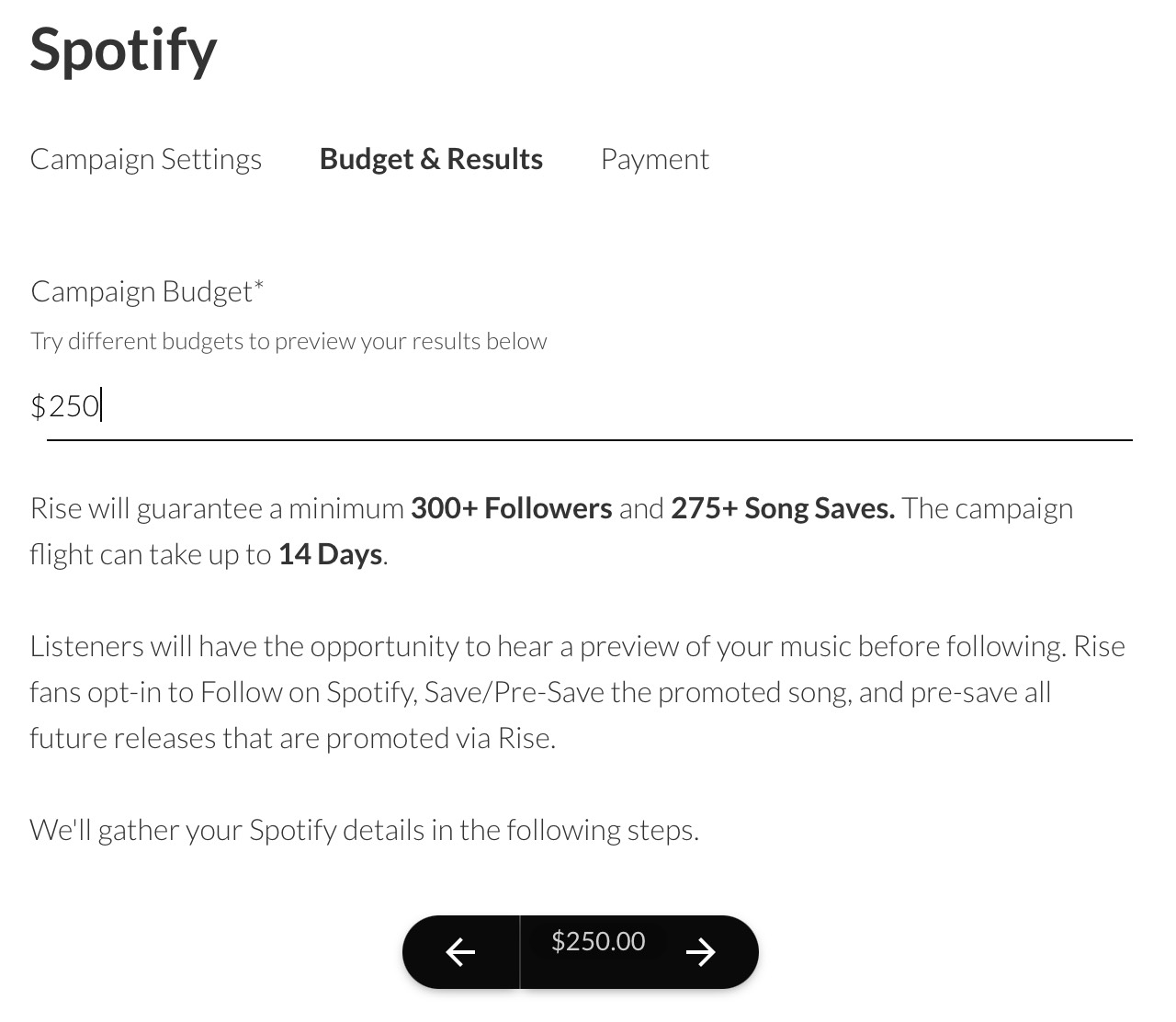
$250, either as a one-off campaign or monthly subscription, guarantees 300 followers and 275 song saves.
Rise also offers exposure campaigns to increase monthly listeners. They recommend running both campaign types in tandem.
Last year, a good friend of mine tried an exposure campaign and was disappointed with the results, so I haven’t bothered. Things have likely changed since then.
Naturally, there’s going to be a lot of skepticism around this sort of promotion. How can they guarantee followers and song saves? How do you know the followers aren’t bots?
Let’s start by explaining where the listeners come from.
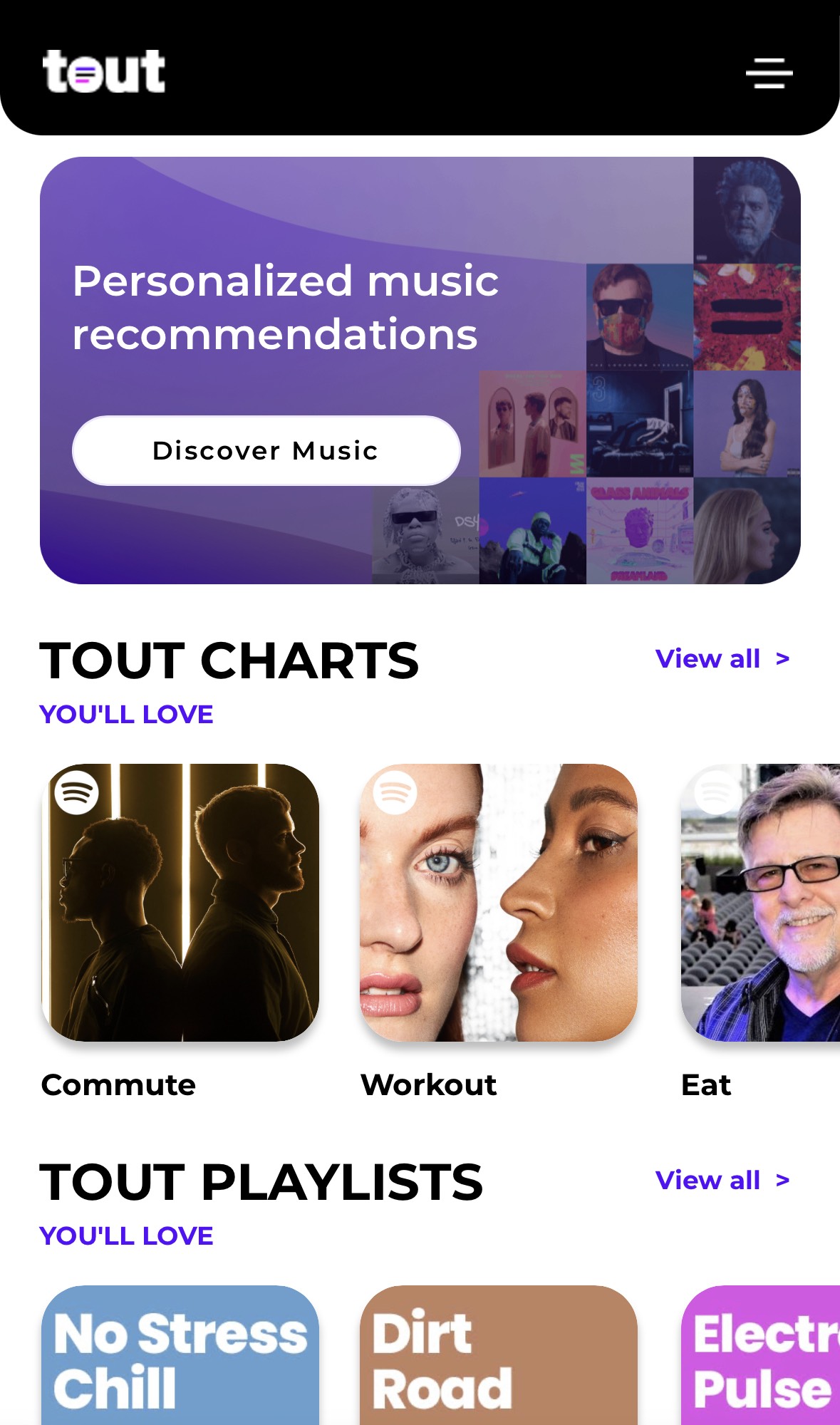
Tout Playlist Network
The easiest way to see how listener acquisition works is to try it yourself at ontout.com, preferably on mobile.
Here’s what you’ll see:
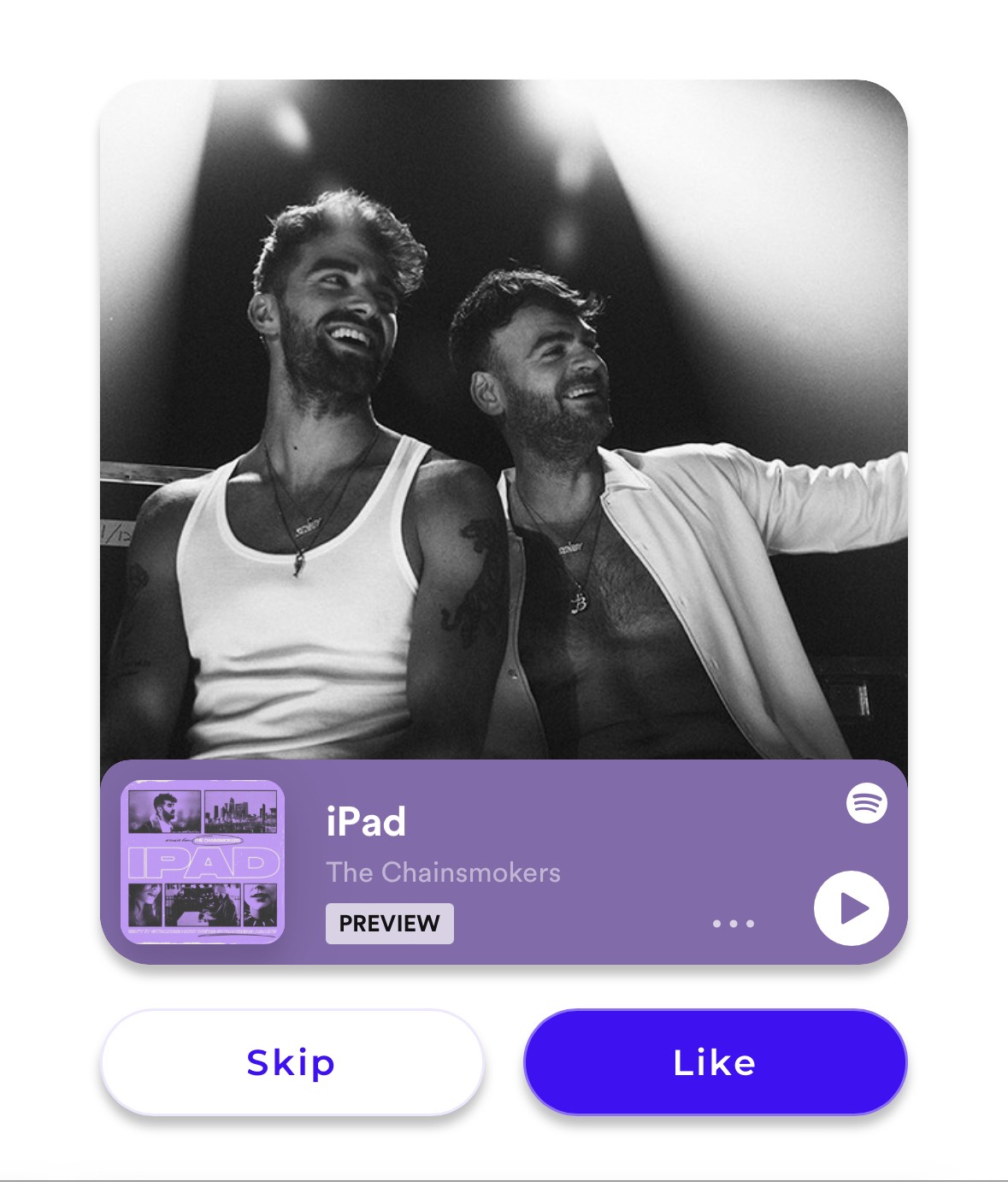
Click on “Discover Music” and you’ll be presented with 30-second clips in your selected genre.
Rise runs ads on Facebook and Instagram to fans of specific interests and genres, directing new listeners straight to the genre that they’re most likely to engage with.
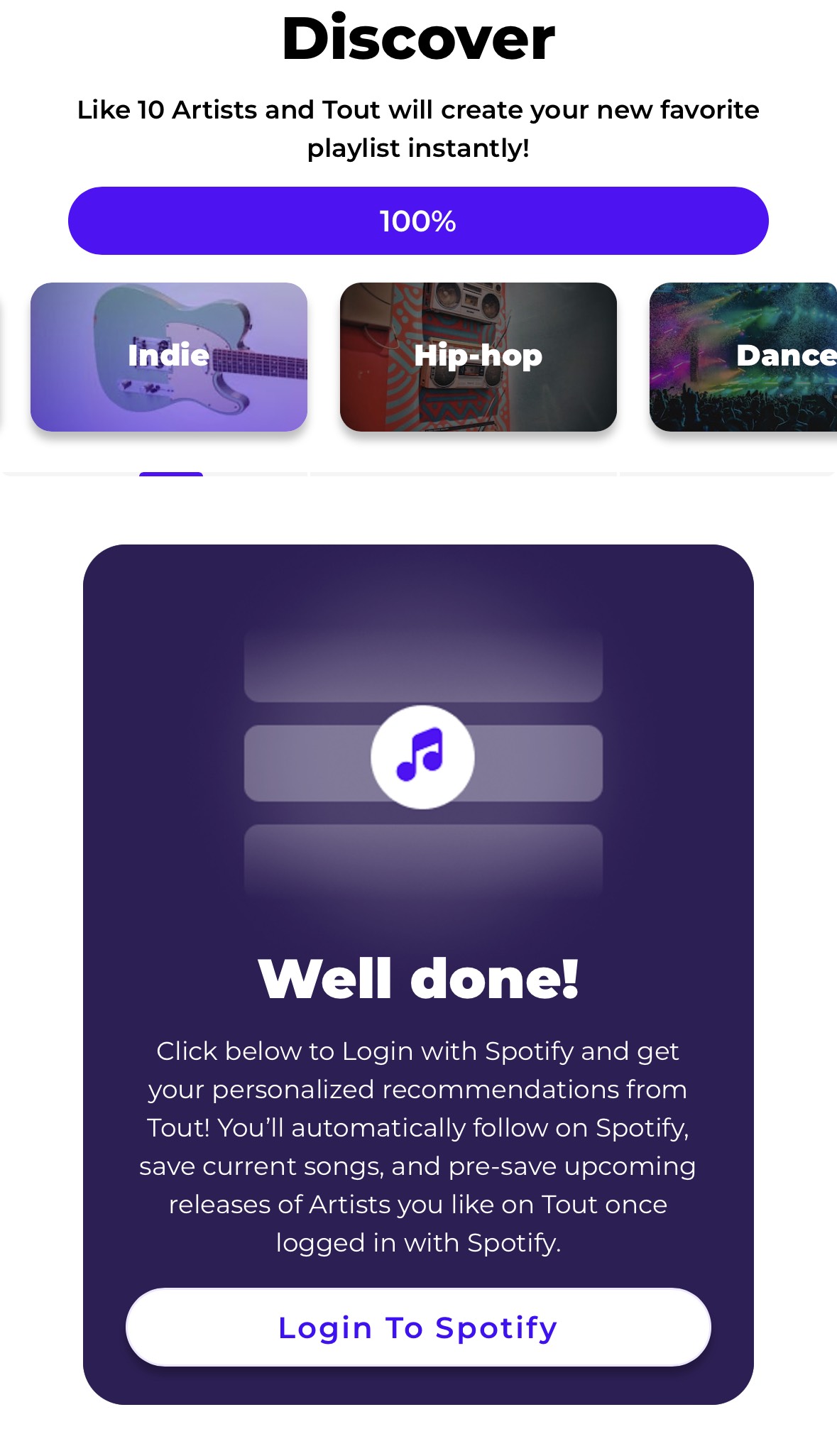
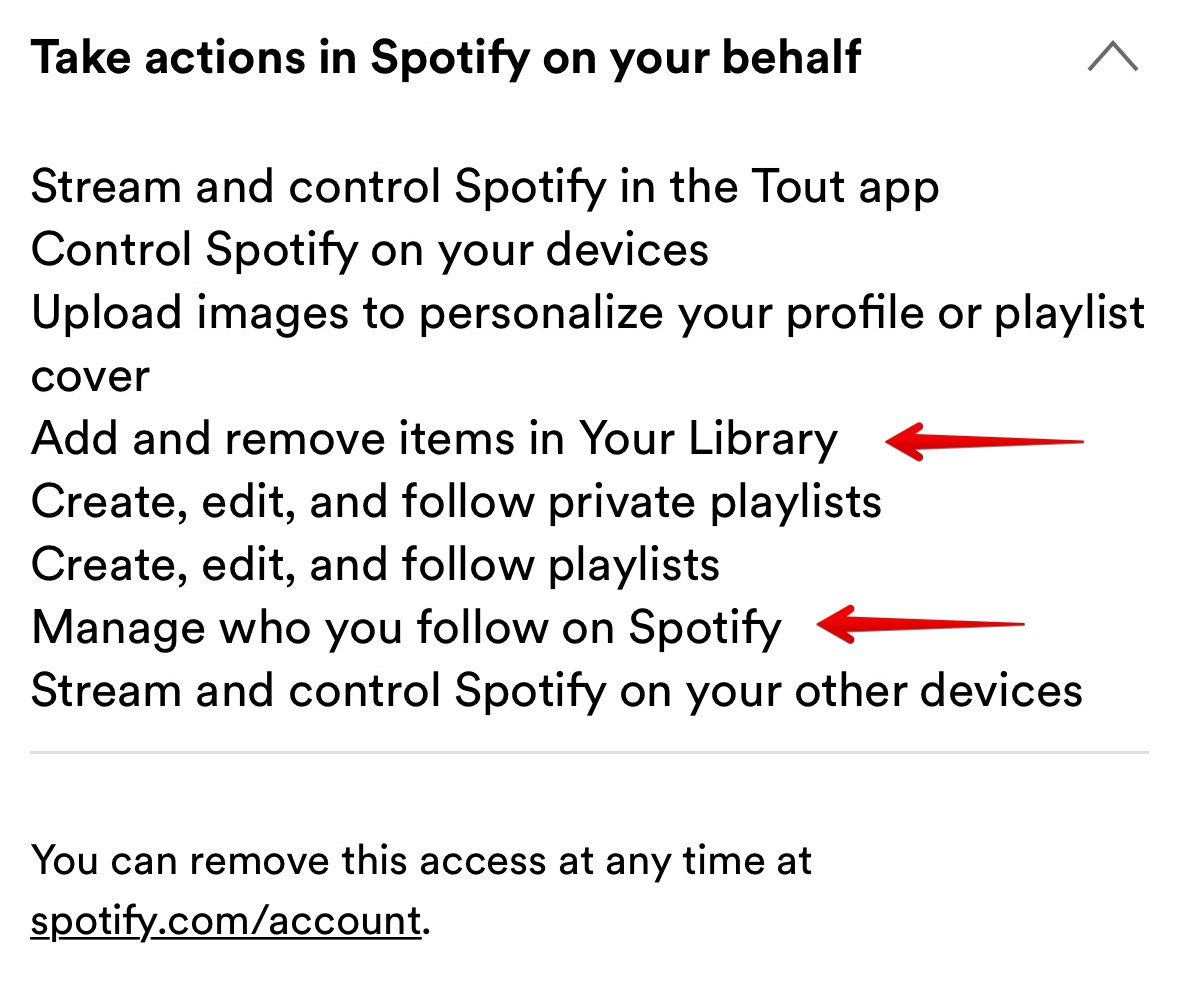
Once you like 10 artists, you grant Tout permission to do basically anything with your Spotify account short of baking biscuits:
Of course, we approve these sorts of permissions all the time, even just for a presave. There’s nothing sinister about it.
You might be wondering if they force every Tout user to follow every Rise artist and presave all their tracks. They don’t.
Every Color Theory follow and pre-save is from a user clicking “Like” after seeing/hearing Color Theory specifically on the website.
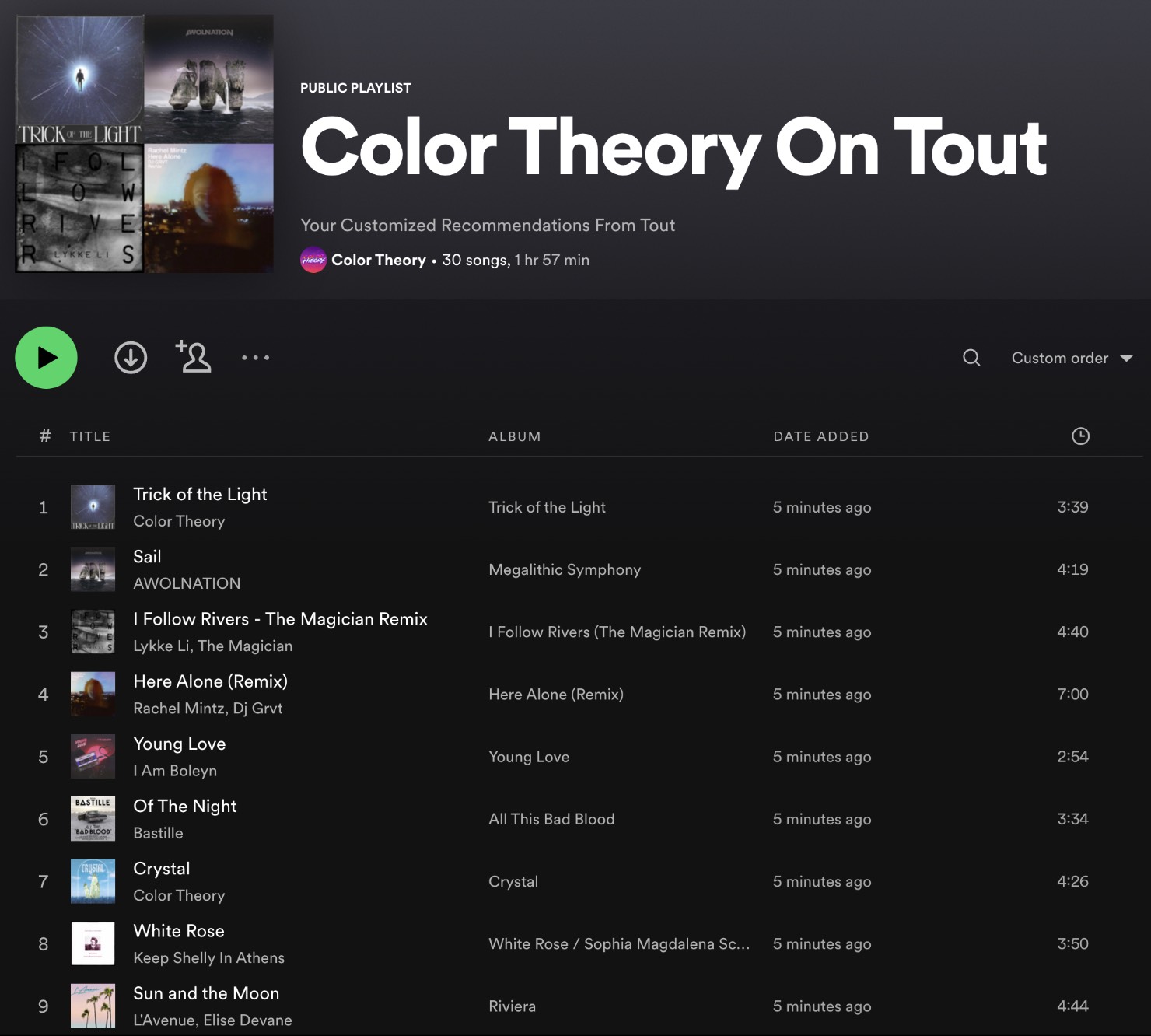
Once you’ve granted permissions, you’re treated to a customized playlist that combines Spotify and Tout recommendations.
Keep in mind that my Spotify username is Color Theory. The playlist title refers to me as a user, not as an artist.
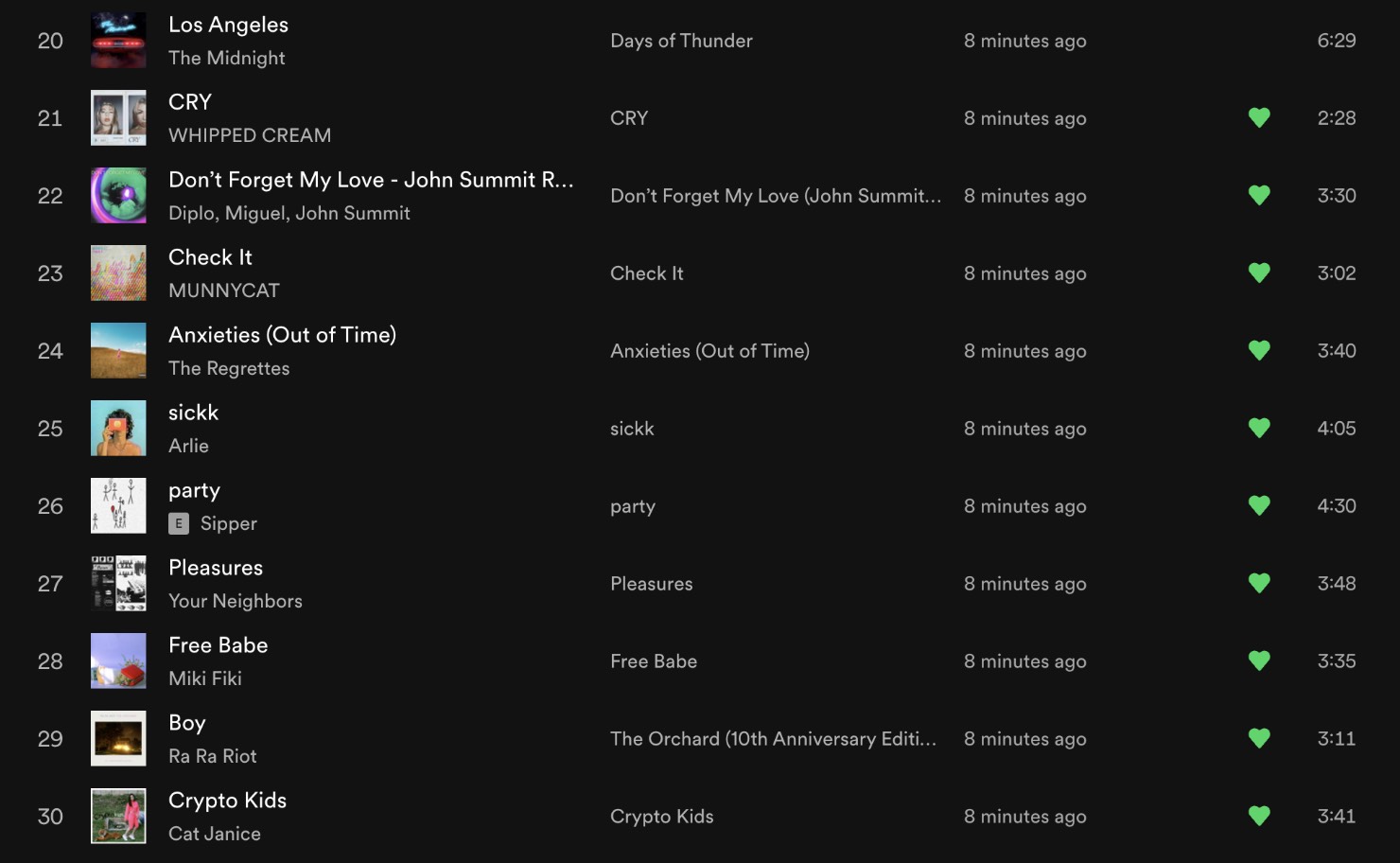
Lurking at the bottom of the playlist are the 10 tracks that I liked during onboarding.
From the listener’s perspective, it’s a pretty sweet deal. You get a customized, regularly updated playlist of new tracks tailored to your tastes, for free. It’s one of those “the customer is the product” sorts of arrangements.
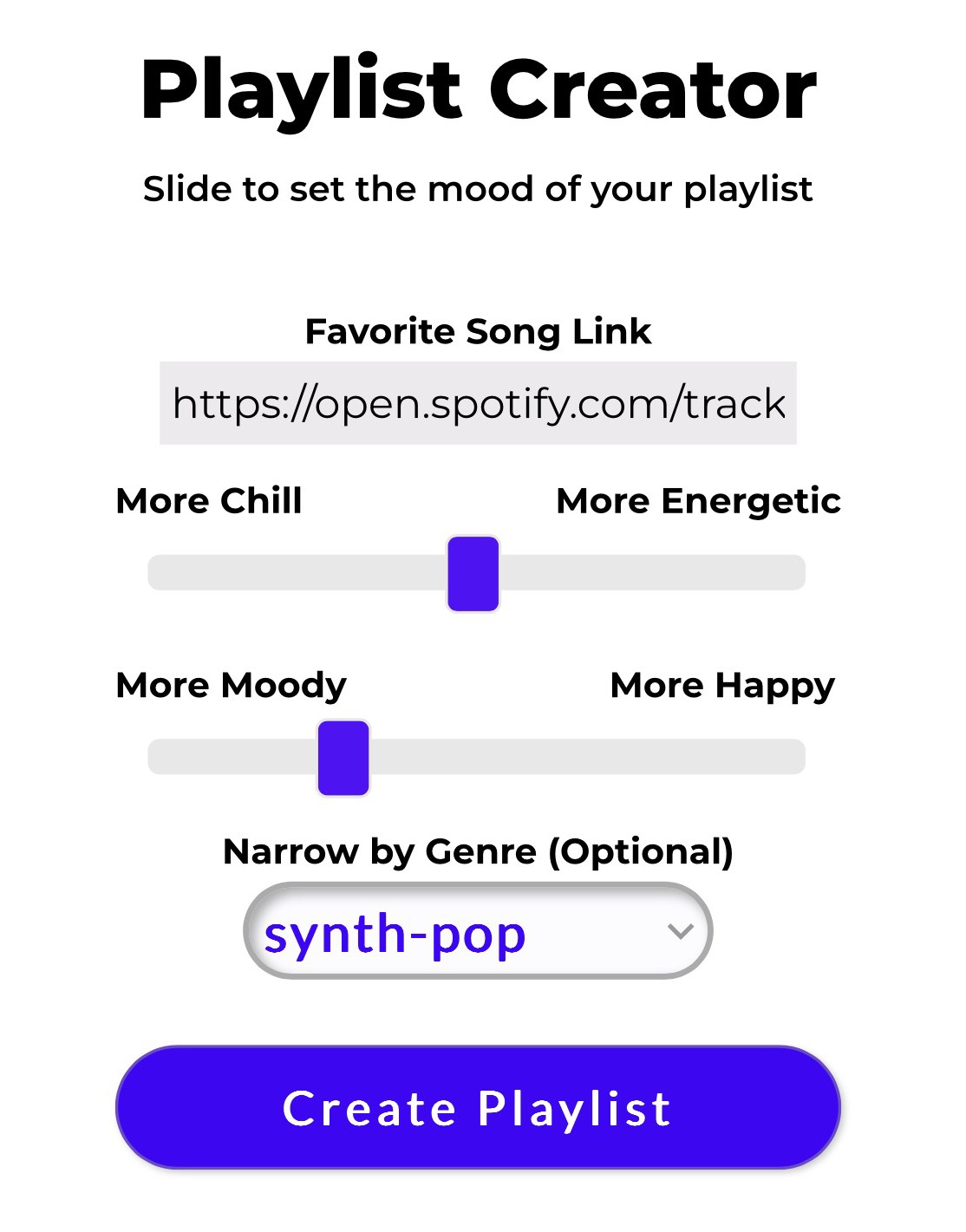
Why is my track at the top of the playlist? Because I went back to ontout.com to try out their Playlist Creator. It added 10 new tracks to the initial 20, using one of my songs as the source:
Users can always refine their playlists further by heading back to the discovery page to like and skip more artists.
Rise campaign creation
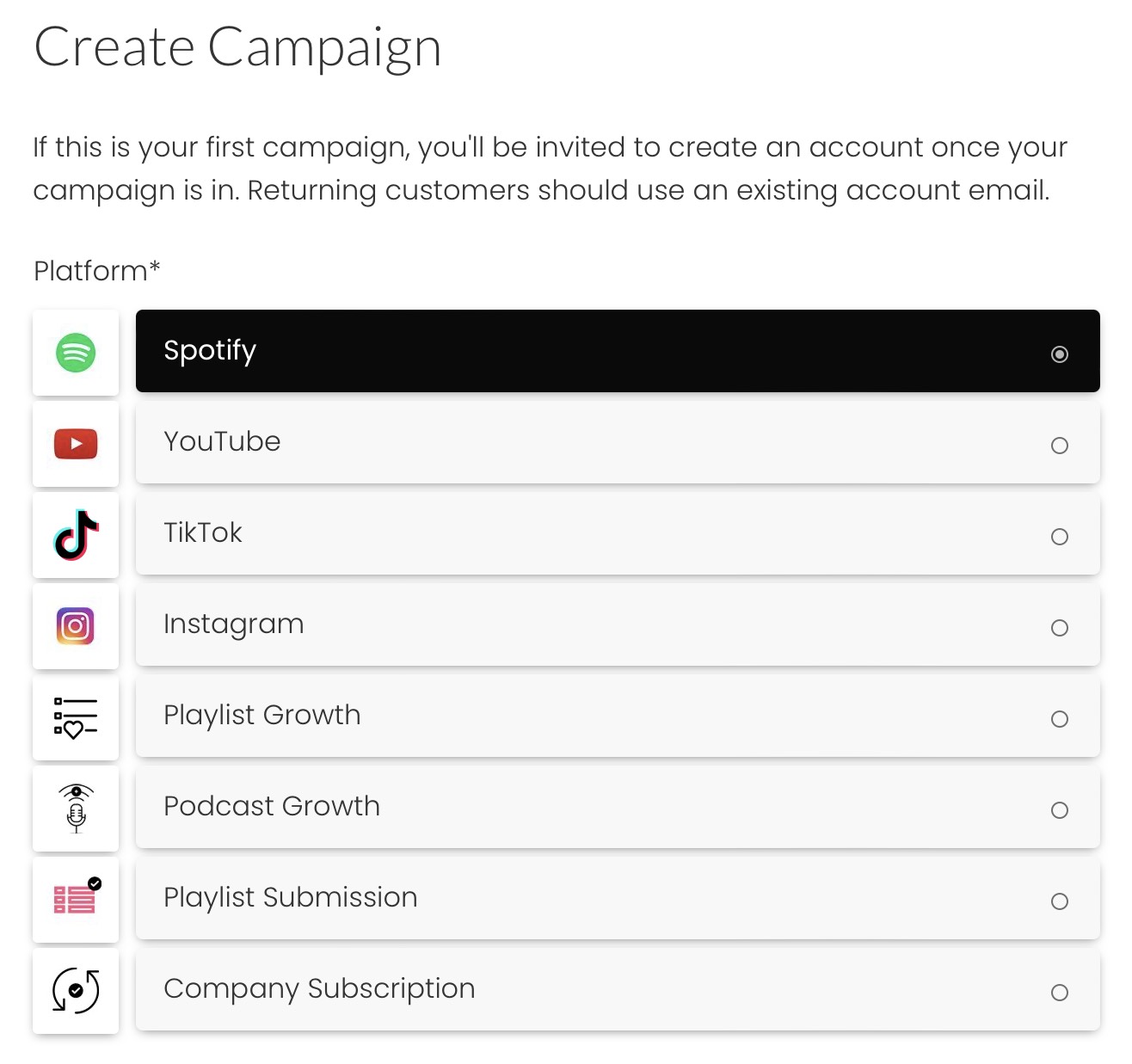
Creating a campaign is straightforward. First, you choose a platform:
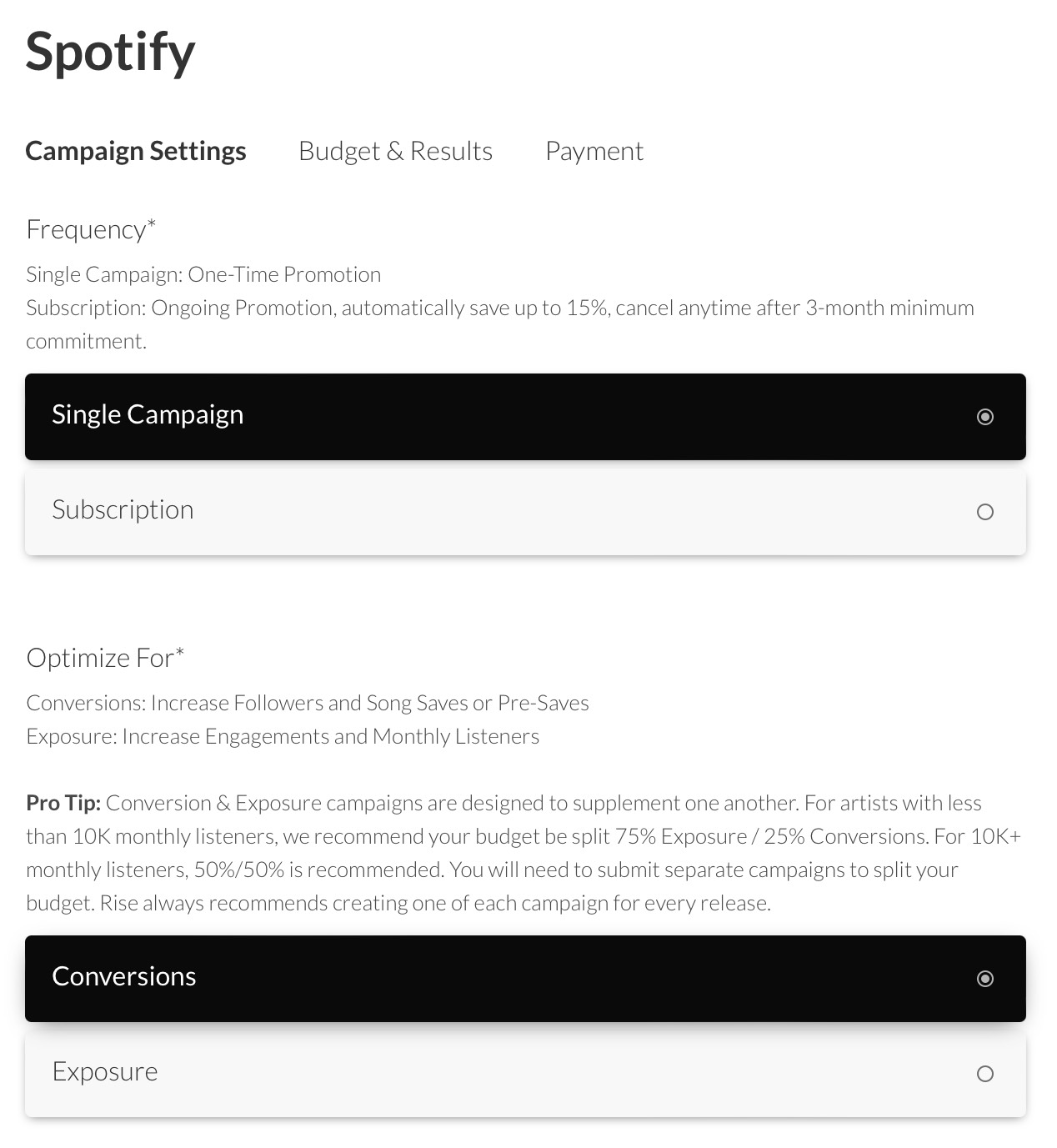
Next, choose a single campaign or subscription, and what to optimize for. I’ve only tested conversions, but if you don’t have much of an audience to begin with, exposure might make more sense.
Don’t miss the “Pro Tip” above
Next up, choose whether it’s a single or EP/Album. Not worthy of a screenshot.
Finally, set a budget, $250 minimum:
And that’s as far as I can go without entering credit card information.
I remember adding Rise to my Spotify for Artists account, granting some Facebook permissions, and uploading visual assets.
My Rise campaign results
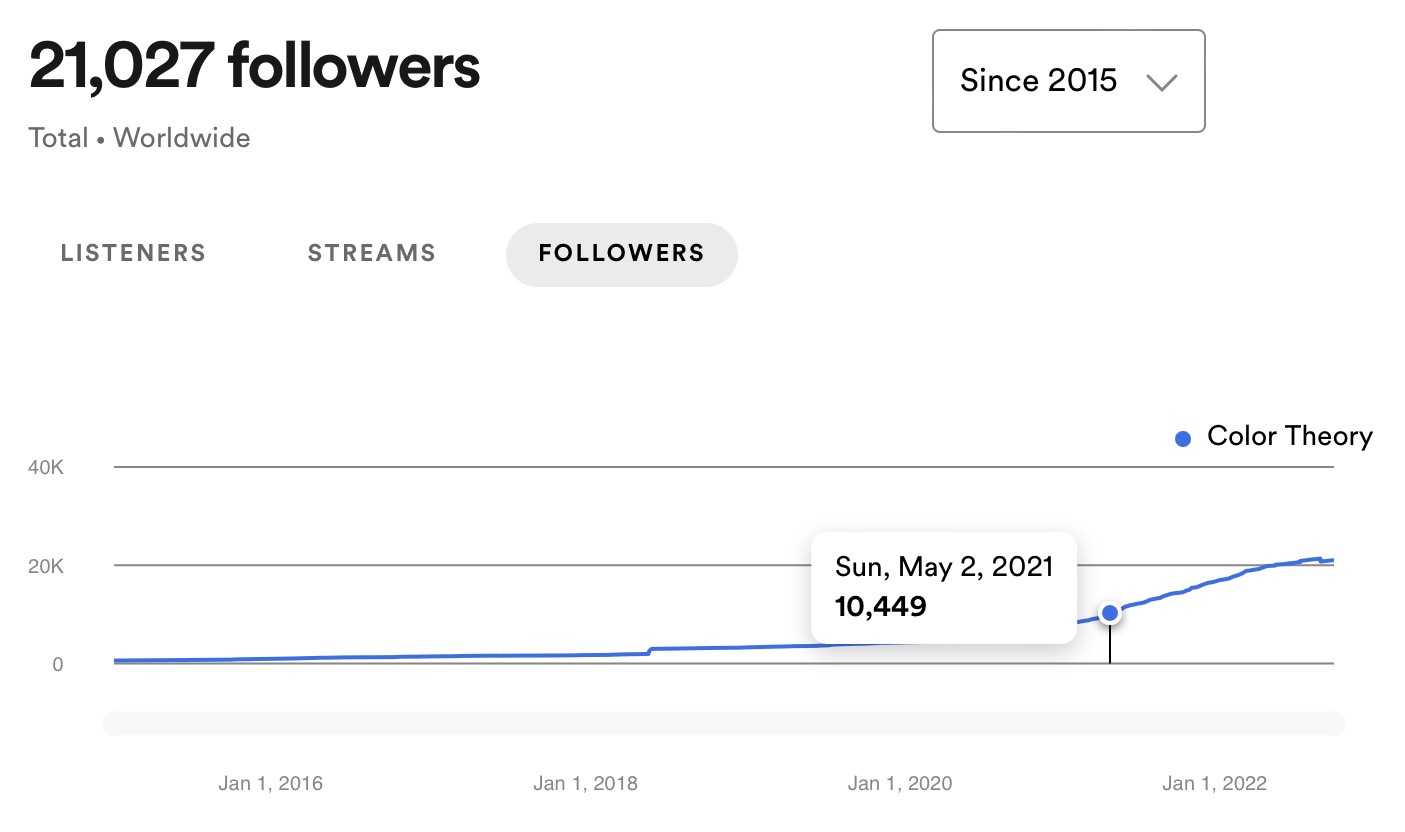
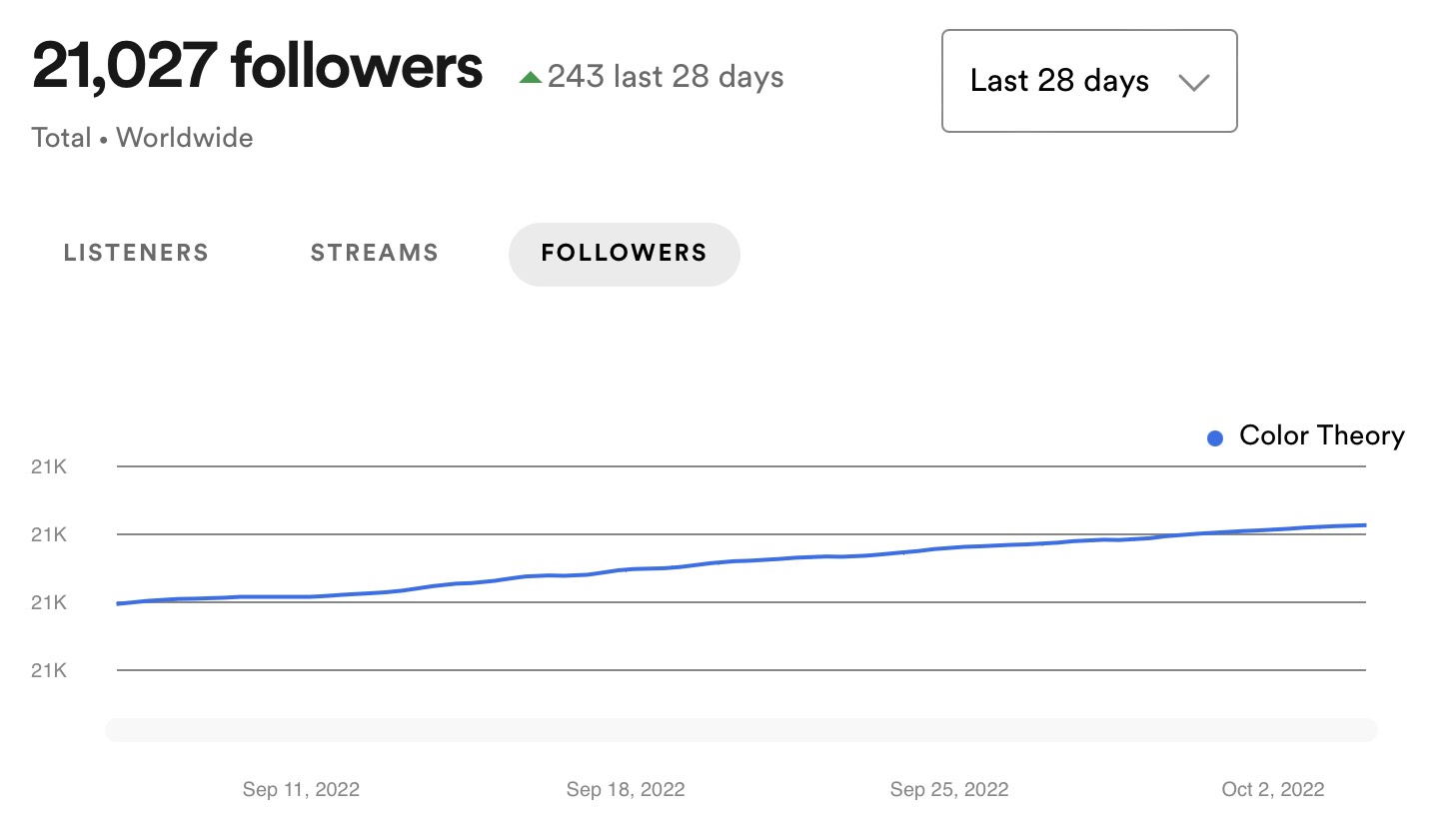
In that nearly year and a half, my follower count grew from just over 10K to 21K:
Of course, those aren’t all Rise followers. Based on their guarantees, I’d only expect 17 x 300 = 5.1K new followers from Rise.
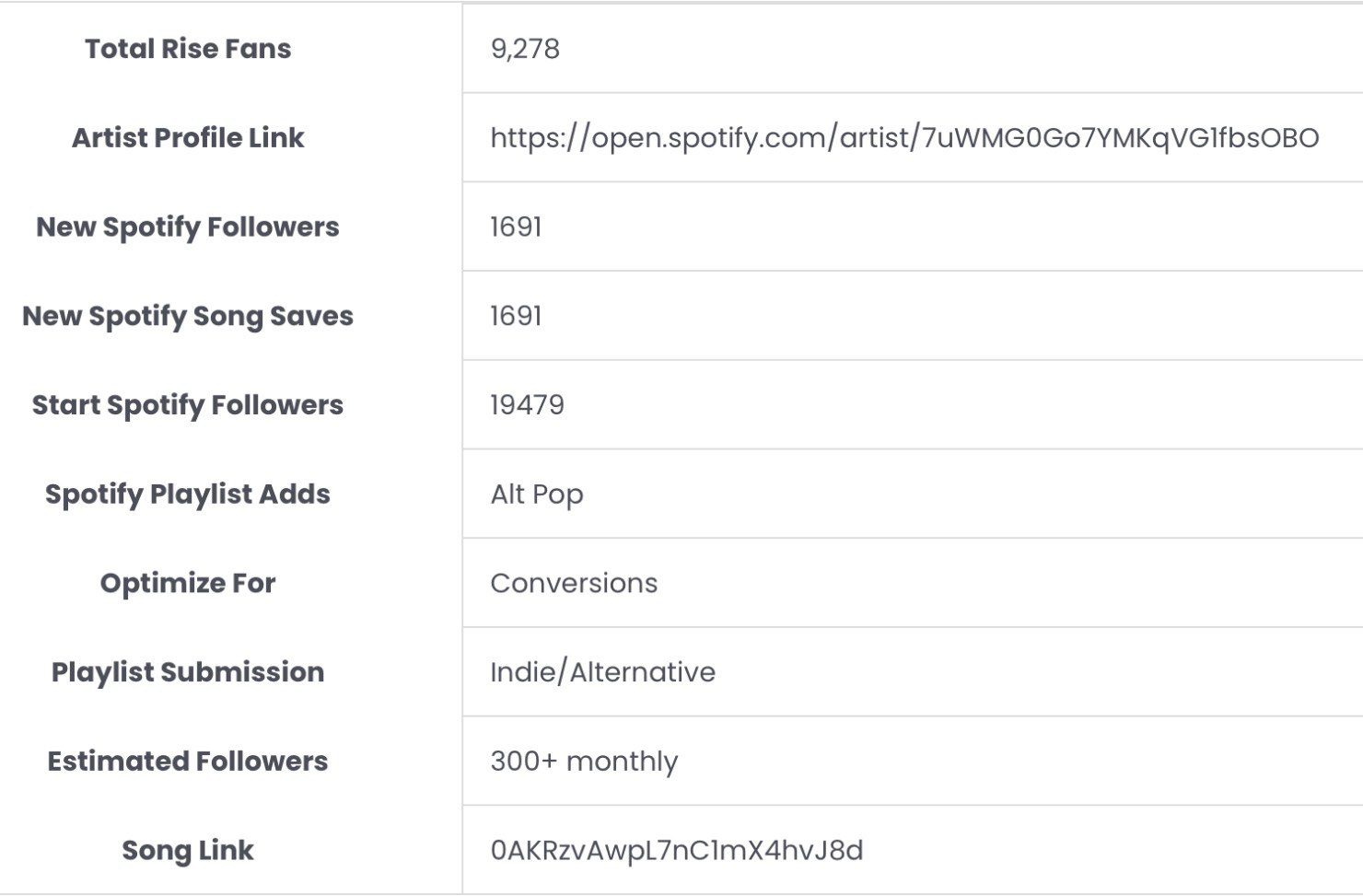
Turns out they overdelivered by a wide margin, with 9.3K new followers to date.
Report as of April 20, 2022
The “Total Rise Fans” figure is current since it’s cumulative, but the other numbers only go back five months. That’s when I relaunched my campaign to take advantage of a promotion that brought my monthly subscription cost down to $202.50.
Here’s my follower growth over the last 28 days:
It’s always been a slow and steady climb, with no sudden jumps or suspicious leaps.
A few months back, someone posted a comment saying that all Rise followers were from The Philippines, presumably because ad rates are low.
That’s not what I’m seeing at all. I see very few followers from India, The Philippines, and other “red light” countries.
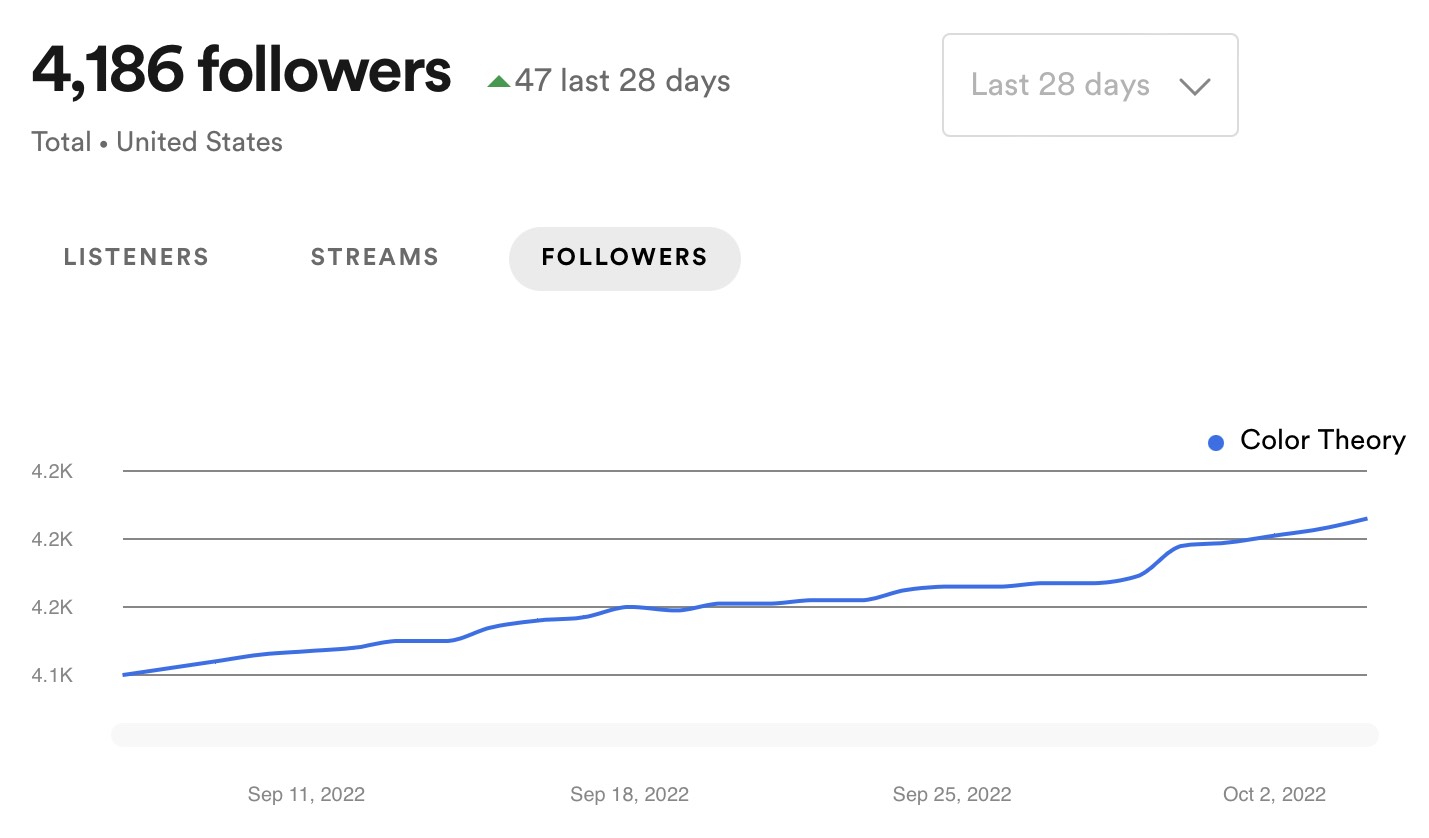
In fact, the biggest chunk of new followers in the past 28 days are from the US:
Poking through the countries dropdown, I see 10 from Argentina, 27 from Brazil, 7 from Canada, 27 from Colombia, 9 from Italy, 26 from Mexico, and 6 from Sweden. Nothing from Germany, France, or the UK.
None of that strikes me as iffy. Historically my playlist ads tend to convert best in South America, so it makes sense that theirs would too.
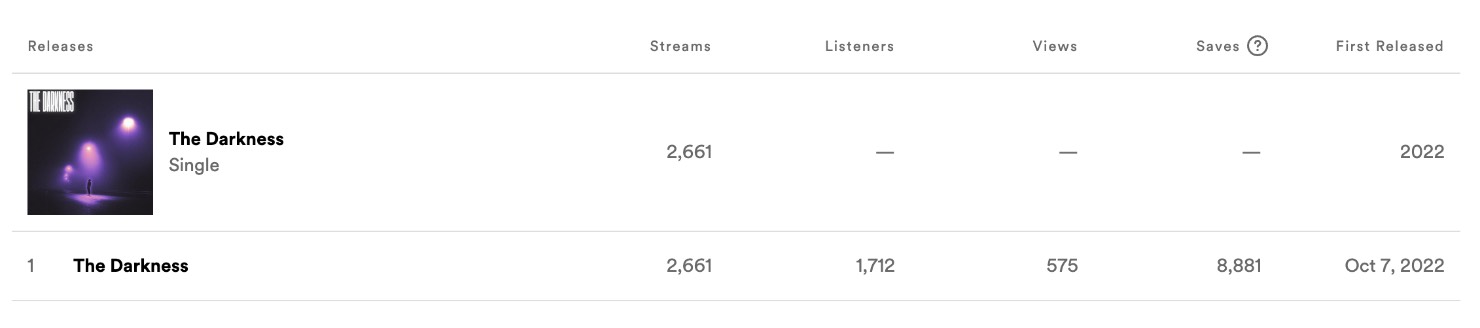
As for presaves, you need to let Rise know about your release ahead of time (duh). I’ve seen the number of saves for my releases grow preposterously. Here’s my latest after two days:
Note that the 8.9K saves shown above is lower than my 9.3K “Total Rise Fans.” Over time, users drop off by revoking permissions, deleting their Spotify account, etc.
The real question is, do those presaves convert to streams?
The honest answer is, I’m not sure. One month the presaves didn’t go through by mistake and the track seemed to do just fine.
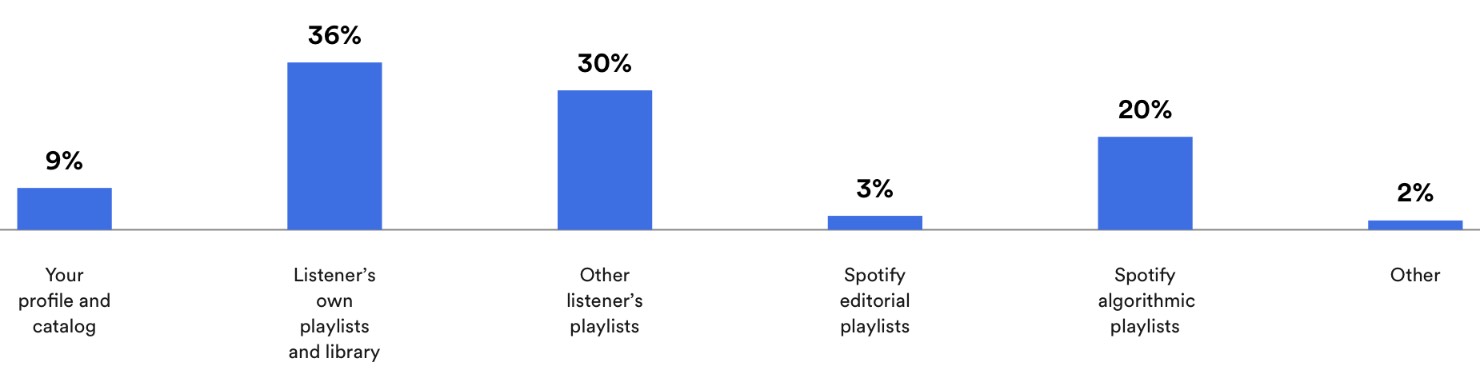
On the other hand, 20% of streams from my latest are from “listener’s own playlist and library,” and that’s after only two days. That sounds like presaves to me, and 98% of those are from Rise.
As far as I can tell, presaves alone don’t do anything to “boost the algorithm.” Nor do presaves without an accompanying stream seem to hurt.
Rise playlist placements
But that’s not all!
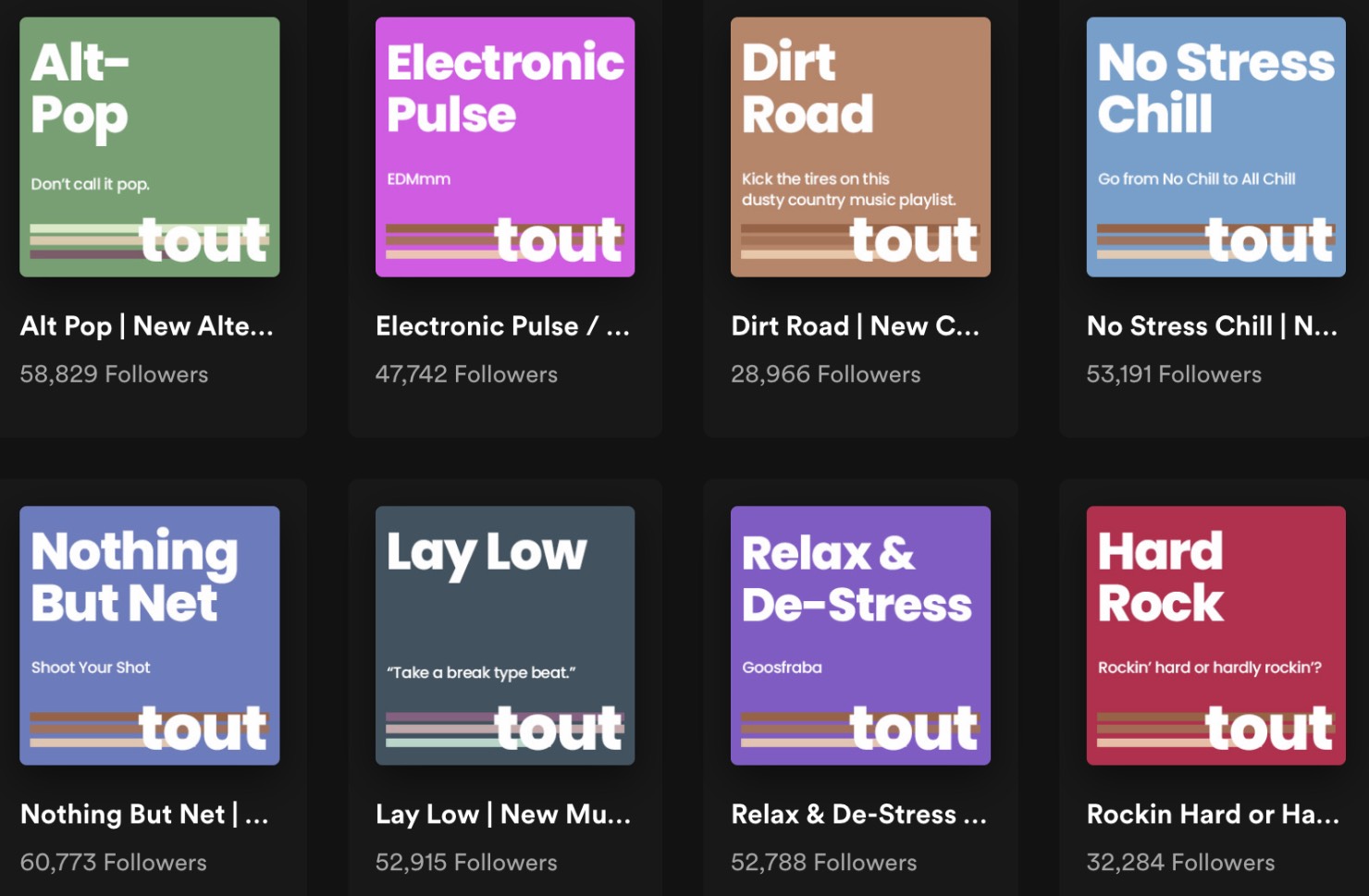
In addition to custom-generated user playlists, Tout boasts a network of high-quality curated playlists with impressive follower counts, promoted with ads:
They feature both major label and indie artists, and are genuinely good! Every Spotify campaign includes an automatic submission to their curators.
I’ve racked up over 30K streams through Tout playlists over the course of my campaigns:
It’s a nice bonus that I wasn’t expecting when I signed up. Between Release Radar and Tout playlists, each of my releases is guaranteed a certain bedrock level of support.
Rise Spotify promotion conclusion
I have to admit, the Rise Spotify conversion campaign makes for a nice package.
You’ve got listener discovery, follower growth, guaranteed presaves, and playlist placement, all rolled into one monthly subscription. It’s the sort of “set it and forget it” solution that Passive Promotion was named for.
My Spotify numbers have grown considerably over the past year and a half, but there’s no way to know how much of that growth is attributable to Rise.
Today I’m at 33K monthly listeners and 90K monthly streams. A healthy number of those are coming from listener libraries, which presumably includes Tout listeners:
What I can say for sure is that the enterprise seems legit. I’m getting followers for $0.40, which is far better than I’ve ever done with my own ads.
If you’d like to give Rise a shot, you can get 10% off any one-time campaign using coupon code PASSIVEPROMO here.
The coupon may be removed at any time, so let me know if it doesn’t work!
Subscriptions are already discounted, but I’d appreciate it if you’d use my referral link. You have to create your campaign in the same session for it to count.
I’ll make a small commission, which will go towards further experiments like this one.
Brian Hazard is a recording artist with over twenty years of experience promoting a dozen Color Theory albums, and head mastering engineer and owner of Resonance Mastering in Huntington Beach, California.
His Passive Promotion blog emphasizes “set it and forget it” methods of music promotion.
Catch more of his promotional escapades in his How I’m Promoting My Music This Monthemail newsletter.
Labels demand a big increase in TikTok royalties but fear angering their new friend
https://bit.ly/3EeaINH
UMG, Sony and WMG are demanding a major increase in payments from TikTok and their negotiations will affect all songwriters, musicians, and labels.
TikTok logged $4 billion in 2021, and its revenue is projected to rise to $12 billion this year. Now labels want TikTok to pay 2 to 10 times more than their existing agreements. That would bring TikTok on par with royalties paid by similar ad-supported social platforms, including Facebook and YouTube.
“We are committed to creating value for rights holders, songwriters, and artists when their music is used, and are proud of the deals we’ve struck and the growing revenue stream we’ve delivered to the industry in a few short years,” Ole Obermann, TikTok’s global head of music, told Bloomberg. He previously worked as the chief digital officer at Warner Music Group.
‘Let’s not make TikTok mad’
Hovering over the negotiations is the reality that TikTok has become an important vehicle to promote new and catalog music as well as to break new artists.
Pulling music aff TikTok is not a viable option.
This is a dilemma similar to the one that labels and music publishers found themselves in more than a decade ago when YouTube exploded as a vehicle for music.
After years of gradual increases, many still believe that YouTube still does not pay creators and rightsholders enough.
Bad Bunny is Apple Music’s Artist of the Year for 2022
https://bit.ly/3NOxRJS
Back in May, MBW reported that Latin music had scored its biggest-ever week by streams worldwide on Apple Music.
Latin Music’s success on the platform was owed, in part, to the release of two blockbuster albums, one from Bad Bunny and one from Música Mexicana star Eslabon Armado.
Released in May, UnVerano Sin Ti, the fourth studio album from independent Puerto Rican superstar Bad Bunny, broke the record for the highest first-week streams worldwide for a Latin album in Apple Music history.
In the same week (to Thurs, May 12), the wider Latin genre achieved its highest-ever weekly streaming total in the US (across all platforms) of 1.82 billion on-demand audio (ODA) streams, according to Luminate data.
At the time, Rimas Entertainment CEO Noah Assad, manager of Bad Bunny, told MBW: There’s “no stopping” Latin Music.
Now, following the news that Latin Music is still on course to hit $1 billion in revenues in the US by the end of the year, and that its growth is also outpacing that of the wider US recorded music market, Apple Music has revealed more news about one of the wider genre’s biggest stars.
Bad Bunny has been named today (November 9) as Apple Music’s ‘Artist of the Year’, in recognition, according to the platform, of his “artistic excellence and influence on global culture in 2022”.
Apple Music also says that Un Verano Sin Ti is the platform’s most streamed album of 2022, and that it’s now “the biggest Latin album of all time” on the platform.
Bad Bunny is the biggest Latin artist of all time by streams worldwide on Apple Music.
Upon its release on May 6, 2022’s Un Verano Sin Ti became the biggest Latin album of all time on Apple Music, holding the record for first-day streams worldwide.
Elsewhere, Bad Bunny’s Moscow Mule holds the record for the biggest Latin song of all time by first-day streams worldwide.
Bad Bunny has logged 22 songs on the Daily Top 100: Global, breaking the record for most simultaneous entries by a single Latin artist, according to Apple Music.
Bad Bunny’s other Apple Music stats include his songs having reached No. 1 on the Daily Top 100 in 34 countries worldwide — more than any other Latin artist. He’s hit the top 10 of the chart in 77 countries.
Meanwhile, 44 of Bad Bunny’s songs have reached the Daily Top 100 in countries across the globe, and three of his songs have hit No. 1 on the Global chart — more than any other Latin artist.
Bad Bunny holds the No. 1, No. 2, and No. 3 Latin albums by first-day streams on Apple Music
In February 2018, Bad Bunny became Apple Music’s first Latin Up Next artist for the platform’s rising artist program.
He also served as the debut host for Trap Kingz, the first Spanish-language global radio show on Beats 1 radio, and hosted the show’s first six episodes in 2017.
“We’re thrilled to celebrate the achievements of Bad Bunny, whose influence on every corner of culture could not be ignored in 2022.”
Oliver Schusser, Apple’s vice president of Apple Music and Beats, said: “We’re thrilled to celebrate the achievements of Bad Bunny, whose influence on every corner of culture could not be ignored in 2022.
“Watching Bad Bunny ascend from an Apple Music Up Next artist in 2018 to our Artist of the Year this year has been nothing short of extraordinary. We congratulate him on his record-breaking year and for continuing to bring Latin music to a massive global audience.”
“When I started, I didn’t have a global fan base.”
Bad Bunny
Speaking in an exclusive Apple Music film, Bad Bunny said: “When I started, I didn’t have a global fan base,”
“I’m grateful for everything I’ve accomplished and everything I’ve experienced. The Latin music movement has grown so much. I would never take full credit or say, ‘It’s because of me.’ No, it’s every one of us. A whole generation.
“Our energy and presence is always felt.” Upon being presented with the Apple Music Award, he adds: “Thank you to Apple Music and to all the people who listen to my music every day. I’m super happy!”Music Business Worldwide
Mediaor
via Music Business Worldwide https://bit.ly/3UszOOz
Songwriters take the win with this Copyright Office ruling
https://bit.ly/3FXMcBT
The Copyright Office may have just lifted some weight off the shoulders of songwriters all around by making sure royalties are going to the right people.
While publishers can be most helpful to many songwriters, others prefer to get their songs back when possible. It would make sense that the royalties that were formerly collected by the publisher would then go to the songwriter, right? That’s not what occurred though, but the Copyright Office has stepped in to make sure that the royalties now goes to the rightful owner.
What was happening was that when the songwriter terminated their publishing agreement and got their songs back, the royalties kept being sent to the publisher, forever. What’s even worse is that the Mechanical Licensing Collective (MLC -the entity that collects and distributes streaming royalties) made this possible by misinterpreting the law. They read it to mean that once a royalty was assigned to an entity (like a publisher), that entity should receive that royalty permanently because of an obscure provision.
Once the error was discovered, the Recording Academy and Songwriters of North America association brought it to the attention of the Copyright Office, who then provided a clearer interpretation that landed in favor of the songwriters.
Termination
When a songwriter sells a publisher the rights to a song, they’re allowed to automatically to get those rights back between 35 and 56 years later, depending on when the song was sold. But termination comes with an exception that says that even if a publisher hands back the rights to the original song, they can keep selling any existing “derivative works” they created when they owned it. What that means is that the songwriter can’t revoke the license of a famous sample, or sue over a movie that featured the song under a sync license.
When streaming came along, the streaming platforms like Spotify received blanket licenses from publishers, so the terminated songs then were interpreted as derivative works. The MLC collected the royalties continued to send it to the former publisher and the songwriter was cut out of the picture.
In a new rule from the Copyright Office last month clarified the situation, stating that, “the copyright owner of the musical work as of the end of the monthly reporting period is the one who is entitled to the royalties.”
New Gear, Gadgets, or Upgrades You Can Use With Spotify
https://bit.ly/3UoMLZH
At Spotify, we know it’s important to be able to listen to your favorite music and podcasts wherever and whenever. We’re serious about making sure you can do just that as part of ourcore ubiquity strategy. That’s why we’ve worked tomake Spotify available on over 2,000 devicesfrom plenty of brands. We’re always adding new ones, so get to know some of our latest additions.
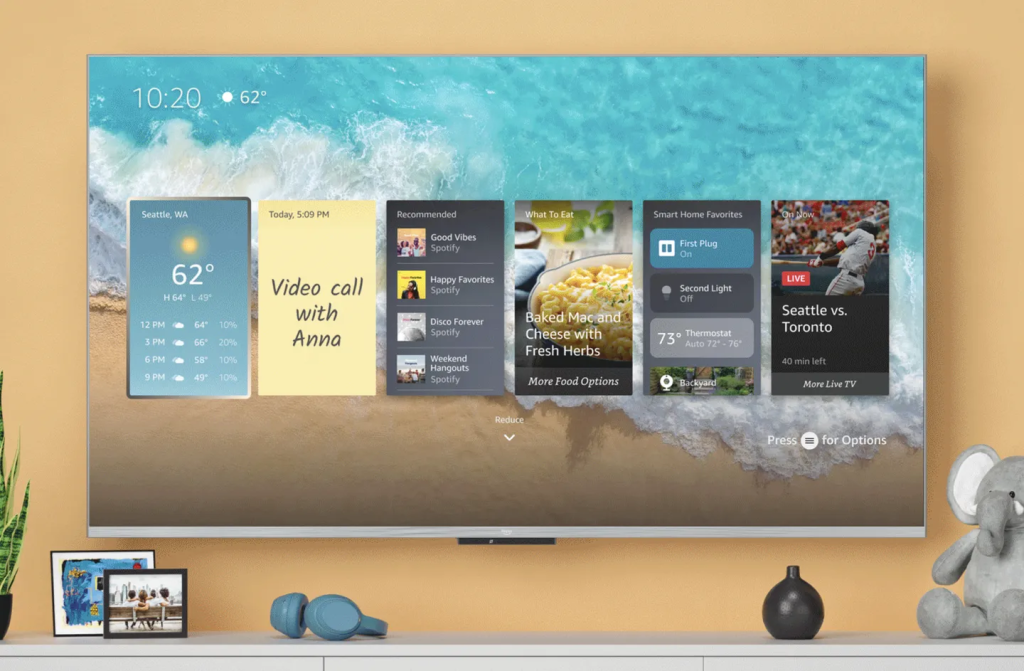
Access Spotify and your recommendations via Ambient mode for AmazonFire TV
Sometimes, bigger is better—users who’ve been listening to their favorites from the big screen on the Amazon Fire TV QLED Omni Series know that. With the all-new Ambient Experience, your Fire TV Omni QLED Series TV proactively shows helpful information throughout the day and provides hands-free access to your favorite music and Spotify recommendations. Beyond that, you can flick through albums, songs, and playlists using the remote control, or viaSpotify Connecton your phone or tablet. Or you can switch between the two for a totally seamless experience.
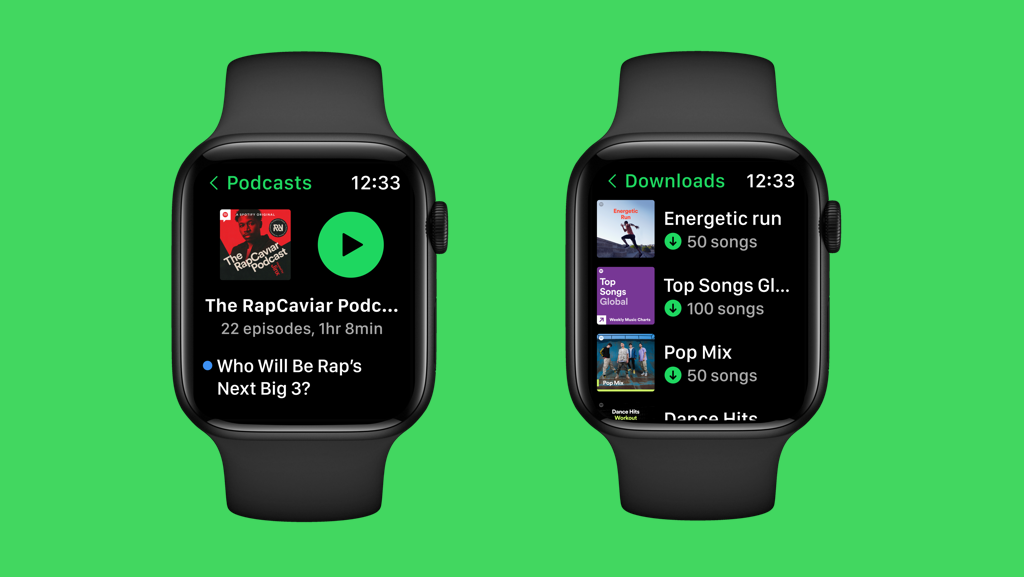
DJ from your wrist with the new Spotify experience on Apple Watch
Starting today, we’re rolling out a new and improved listening experience for Spotify users onApple Watch. This means you’ll be able to more easily browse and choose your favorite music and podcasts in Your Library, as well as more quickly download music to listen offline from the watch itself. There’s also a new sleek design with larger artwork, animations, and added functionality—like swiping to like a song. It’s also super easy to spot new episodes marked with a blue dot, so you’ll never miss fresh episodes from your favorite creators. Make sure to update to the latest version.
Upgrade your travel with our new delta experience
Spotify andDeltaare ready to make your next flight soar.We’ve had anexisting partnershipwith Delta, but now we’re taking our relationship to new heights byputting our own spin on the boarding process: We’re curating the music that plays overhead as you find your seat. Theplaylistwill update monthly to include Delta customers’ favorites, so even frequent flyers will experience a fresh music rotation.
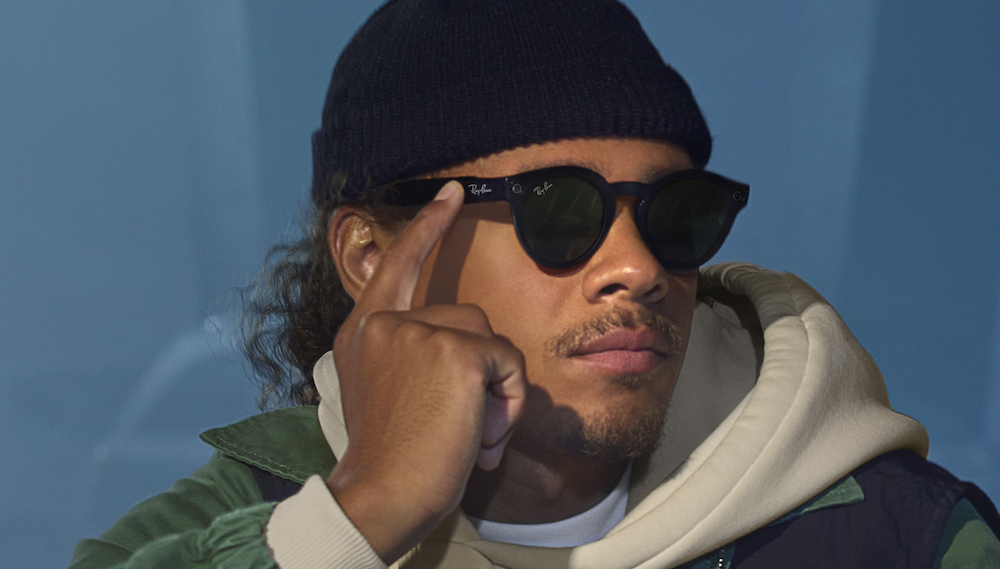
Rock your shades with Spotify Tapon Ray-Ban Stories
On the go? Then you know the drill: You turn on your phone’s Bluetooth, place it in your pocket, shove the buds in your ear, juggle your coffee to the other hand, and finally, reach back into your pocket to grab your phone again to open up your Spotify app and press play. We knew there had to be an easier way—and there is:Spotify Tap. For those who are already rocking a pair of Ray-Ban Stories, we recently added Spotify Tap for you to easily enjoy your favorite tunes without having to take out your phone. Simply tap and hold on the side of your glasses to play Spotify. And if you want to hear something different, tap and hold again and Spotify will recommend something new. Find even more gear and gadgets that integrate with Spotify.








 on Ray-Ban Stories